
Ruby Hotels
All sites of the group on FoodNotify. Purchasing and stock counts per hotel, and head office sees all hotels in the same figures.
ERP for hotel groups
Restaurant, bar, banqueting and breakfast are cost centres of their own. Every hotel orders, counts and books with the same item master, and head office sees all hotels in the same figures. Ruby Hotels and a&o Hostels work this way at all their sites.
Book a demoA hotel is not a restaurant with rooms. It has several outlets, each with its own stockroom, menu and food cost, plus banqueting with fluctuating quantities and breakfast that is billed through the room rate. Software for a single restaurant knows one stockroom and one POS. As soon as goods move from the restaurant to the bar, or banqueting is supplied from the restaurant stockroom, the food cost per outlet is no longer right, and the group ends up comparing hotels that count differently.
Restaurant, bar, banqueting, breakfast, room service: every outlet has its own stockroom, order lists and theoretical-versus-actual food cost. The assignment is part of the setup, not of the daily work.
Transfers between stockrooms instead of a mess of paper slips. Goods that go from the restaurant to the bar are consumed there and counted there. Between hotels too, when the group buys centrally.
Items with a GTIN or supplier number exist once, not per hotel. Prices come from the supplier catalogues. That is why the hotels’ figures are comparable, and head office can actually enforce framework agreements.
Every outlet reports its food cost from goods receipt, transfers and stock counts. The theoretical food cost comes from recipes and POS data. The difference per outlet shows where shrinkage, wrong portions or unbooked movements are hiding, before the month-end close shows it.
The stock count runs in the app on a smartphone or tablet, with barcodes and partial quantities, per stockroom, with selective interim counts for expensive product groups. At a&o Hostels, the stock count has taken half the time since.
Purchasing orders from Smart Lists per stockroom; the forecast suggests quantities, the order goes directly to the supplier, and BEAM checks the invoice against the order and the catalogue price.
Example hotel, theoretical versus actual per outlet
Sample data, August, as % of revenue
| Outlet | Theoretical | Actual | Difference |
|---|---|---|---|
| Restaurant | 29.4 | 30.1 | +0.7 |
| Bar | 21.0 | 26.8 | +5.8 |
| Banqueting | 27.5 | 28.3 | +0.8 |
| Breakfast | €4.10 / guest | €4.35 / guest | +0.25 |
The bar is 5.8 points above theoretical: open bottles with no transfer from banqueting. Head office sees it on the first of the month, not in the quarterly report.
All sites of the group on FoodNotify. Purchasing and stock counts per hotel, and head office sees all hotels in the same figures.
Over 50 properties in Europe, over 100 suppliers in the system. The stock count takes half the time.
Read the success story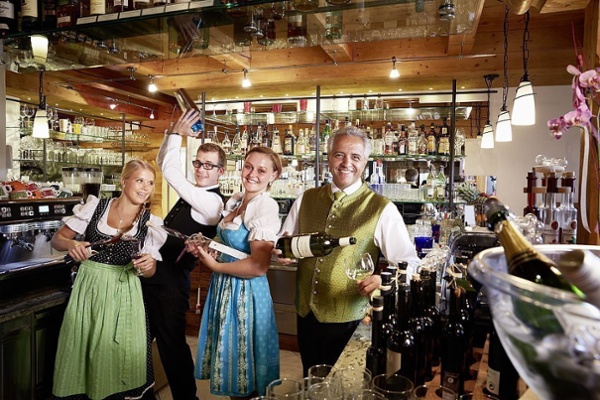
Family-run resort with a kitchen at toque level; procurement, recipes and costing through to ordering from regional farmers.
Read the customer story“A colleague told me that someone said after the stock count: ‘That’s fun.’ To be frank, I had expected someone to say: ‘It’s going well now.’ But fun? That was new even to me.”
For five hotels. The group provides one contact person and its supplier list, and FoodNotify takes care of the rest. The phases are set out like this in every quote.
Goals, hotels, outlets, suppliers and POS systems are recorded; a dedicated contact person at FoodNotify guides you through the implementation.
Supplier catalogues are loaded and matched; suppliers without a catalogue are set up together.
Kitchen, bar, purchasing and head office, each trained separately, online or on site.
One hotel goes first. Only when the POS data is correct for each outlet is the pilot considered accepted.
The remaining hotels follow with the same templates, permissions and cost centres.
Yes. Every outlet is a cost centre of its own, with its own stockroom. Orders, goods receipt, stock counts and food cost run per outlet, with analysis per hotel and across the group.
As a transfer between stockrooms. The goods leave one stockroom and arrive in the other, and the food cost stays with the outlet that consumes them.
Lightspeed, Amadeus (LINA), ASSD, Oracle Simphony, Hypersoft, Gastronovi (via Sell&Pick), Shiji, Hellotess, Apro, Speedy, Tipos, Matrix, ready2order, Xenus and many more run as standard. Other POS systems are connected via the open API; we clarify feasibility and effort before the contract is signed, and the POS connection is part of the pilot acceptance.
Over 1,000 suppliers deliver their data to FoodNotify, 126 of them directly via interface. Missing suppliers are set up together; BEAM reads their prices from the invoice.
Four to six weeks for five hotels. One hotel goes first as a pilot; only when the POS data is correct do the remaining hotels follow, with the same templates and permissions.
Starter from €174.90 per site and month; Pro and Enterprise are priced individually, with no limit on the number of users. Worthwhile from a hotel with roughly €1 million in annual F&B revenue. More on this under Pricing and onboarding.
Not a POS system, not a PMS, not accounting, not staff scheduling. There are interfaces to these systems; FoodNotify does not replace them. More on this under FoodNotify in Numbers and on the home page.
Book a demoThe sample data in the table is fictitious. Customer figures come from the linked customer reports and from information provided by the customers, as of September 2026.