
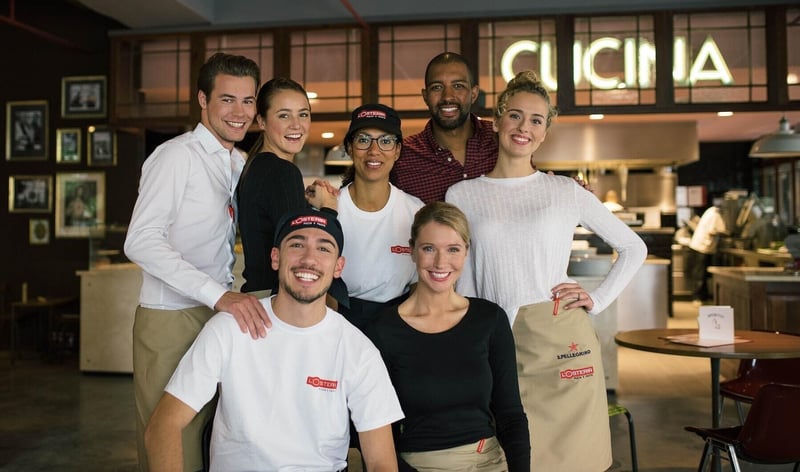
L’Osteria
Over 200 restaurants in Germany and France with one shared item master. Food cost fell by 3.82 percentage points in the first three months.
Read the success storyERP for franchises and restaurant chains
Every site orders, counts and books with the same item master, and head office sees all businesses in the same figures. L’Osteria, with over 200 restaurants, and Concept Family, with over 70 businesses, work this way.
Book a demoSites in Europe
Suppliers with data in the system
Restaurants at L’Osteria
Businesses at Concept Family
Chains and brands that work with FoodNotify




A franchise or restaurant-chain group is not one big restaurant. Several brands, each with its own menu, run on the same purchasing, every site counts for itself, and head office needs the same figures from all businesses. Software for a single restaurant knows one stockroom and one POS. As soon as items are set up freely at each site, or sites count differently, food cost and prices can no longer be compared.
Items with a GTIN or supplier number exist once, not per site. Prices come from the supplier catalogues. That is why the sites’ figures are comparable, and head office can actually enforce framework agreements.
Brands with their own menu run in the same system. At Concept Family, that means five concepts with over 70 businesses, including Wilma Wunder, Enchilada and Aposto.
Food cost per dish, deviations in euros and percent, and supplier prices can be compared across all sites, without each business maintaining its own spreadsheet.
Every site reports its food cost from goods receipt and stock counts. The theoretical food cost comes from recipes and POS data. The difference per site shows where shrinkage, wrong portions or unbooked movements are hiding, before the month-end close shows it.
The stock count runs in the app on a smartphone or tablet, with barcodes and partial quantities. At Wilma Wunder (Concept Family), it went from 2 people × 3 hours to 1 person × 1 hour.
Purchasing orders from Smart Lists per site; the forecast suggests quantities, the order goes directly to the supplier, and BEAM checks the invoice against the order and the catalogue price.
Example chain, theoretical versus actual per site
Sample data, August, food cost as % of revenue
| Site | Theoretical | Actual | Difference |
|---|---|---|---|
| Munich | 28.6 | 29.1 | +0.5 |
| Hamburg | 28.6 | 32.8 | +4.2 |
| Cologne | 28.6 | 29.4 | +0.8 |
| Vienna | 28.6 | 28.9 | +0.3 |
Hamburg is 4.2 points above theoretical: the portions deviate from the recipe. Head office sees it on the first of the month, not in the quarterly report.
Over 200 restaurants in Germany and France with one shared item master. Food cost fell by 3.82 percentage points in the first three months.
Read the success story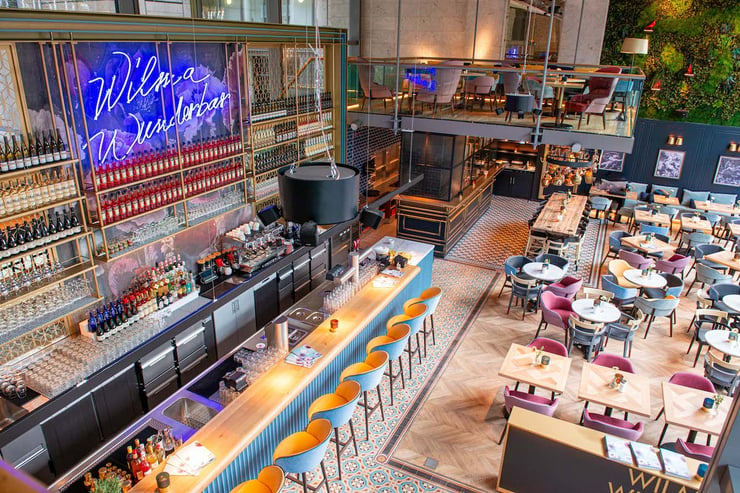
Over 70 businesses with five concepts, including Wilma Wunder, Enchilada and Aposto. The stock count went from 2 people × 3 hours to 1 person × 1 hour.
Read the success story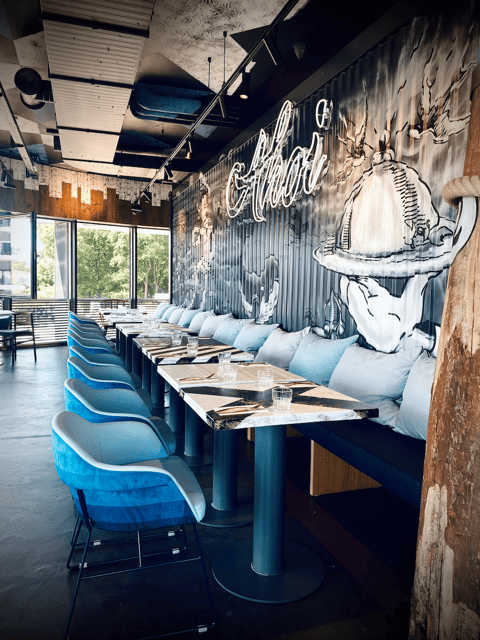
Franchise concept with ten sites in Germany. Orders are placed digitally on a tablet right in the cold store, and all suppliers are bundled in one place.
Read the customer story“FoodNotify met exactly the requirements we have. Digitalisation in the hospitality industry needs strong partners, and in FoodNotify we have found one.”
For five sites. The group provides one contact person and its supplier list, and FoodNotify takes care of the rest. The phases are set out like this in every quote.
Goals, sites, concepts, suppliers and POS systems are recorded; a dedicated contact person at FoodNotify guides you through the implementation.
Supplier catalogues are loaded and matched; suppliers without a catalogue are set up together.
Kitchen, purchasing, site management and head office, each trained separately, online or on site.
One site goes first. Only when the POS data is correct is the pilot considered accepted.
The remaining sites follow with the same templates, permissions and cost centres.
Yes. Orders, goods receipt, stock counts and food cost run per site, with analysis per business and across the whole group.
Items exist once for the group, not per site. Prices and product data come from the supplier catalogues and are updated continuously.
Lightspeed, Amadeus (LINA), ASSD, Oracle Simphony, Hypersoft, Gastronovi (via Sell&Pick), Shiji, Hellotess, Apro, Speedy, Tipos, Matrix, ready2order, Xenus and many more run as standard. Other POS systems are connected via the open API; we clarify feasibility and effort before the contract is signed, and the POS connection is part of the pilot acceptance.
Over 1,000 suppliers deliver their data to FoodNotify, 126 of them directly via interface. Missing suppliers are set up together; BEAM reads their prices from the invoice.
Four to six weeks for five sites. One site goes first as a pilot; only when the POS data is correct do the remaining sites follow, with the same templates and permissions.
Starter from €174.90 per site and month; Pro and Enterprise are priced individually, with no limit on the number of users. Worthwhile from a site with roughly €1 million in annual revenue. Pricing and onboarding
Not a POS system, not accounting, not staff scheduling. There are interfaces to these systems; FoodNotify does not replace them. More on this under FoodNotify in Numbers and on the home page.
Book a demoThe sample data in the table is fictitious. Customer figures come from the linked customer reports and from information provided by the customers, as of November 2026. Individual results, no guarantee.